
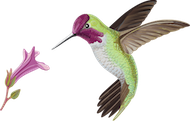
Why bird brains are more brilliant than anyone suspected
Although bird brains are tiny, they’re packed with neurons, especially in areas responsible for higher level thinking. Two studies published last month in Science explore the structure and function of avian brains—revealing they are organized similarly to mammals’ and are capable of conscious thought.
How to slow extinctions? Restore farmlands to nature
A global road map, recently published in Nature, identifies a path to soaking up almost half of the carbon dioxide that has built up since the Industrial Revolution and averting more than 70 percent of the predicted animal and plant extinctions on land. The key? Returning a strategic 30 percent of the world’s farmlands to nature.
The California Water Program
Water is essential for all life, but as human populations have grown, water has been harnessed to support people and not nature.
Through the Lens: Backyard Biodiversity
Scott Logan has documented 400+ animal species in The Gottlieb Native Garden, Susan Gottlieb’s incredible home garden. Join Scott and Susan on this backyard odyssey with beautiful photographs and amazing footage.
Winners of Wildlife Photographer of the Year 2020
The Wildlife Photographer of the Year competition, founded in 1965, is an annual international showcase of the best nature photography. This year, the contest attracted more than 49,000 entries from around the world.
It Takes (More Than) a Village
Conserving Bumble Bees with Community-Based Atlas Projects
New Video Series and Website help tell the story of California’s Vulnerable Species
Saving Species Together, a joint project between the California Department of Fish and Wildlife (CDFW), the U.S. Fish and Wildlife Service and the National Oceanic and Atmospheric Administration (NOAA) Fisheries, illustrates how resource agencies, private landowners, non-profits and citizens have come together to help some of California’s vulnerable species.
Genomic study reveals evolutionary secrets of banyan tree
The banyan fig tree Ficus microcarpa is famous for its aerial roots, which sprout from branches and eventually reach the soil. The tree also has a unique relationship with a wasp that has coevolved with it and is the only insect that can pollinate it. In a new study, researchers identify regions in the banyan fig’s genome that promote the development of its unusual aerial roots and enhance its ability to signal its wasp pollinator.
CNPS Applauds Executive Order Accelerating Governor’s Commitment to Preserving Biodiversity
Sacramento – California is one of the world’s 36 biodiversity hotspots, and today Gov. Newsom issued an Executive Order to coordinate intersectional efforts to protect species and habitats while achieving the state’s carbon neutrality goals.
Study: California crops that lack close native relatives require less pesticide
Persimmons, asparagus, figs and other crops distantly related to native California plants attract fewer pests and diseases than the closer kin, and thus receive fewer pesticide treatments, according to a newly published article by two UC Davis-linked scientists in the Proceedings of the Natural Academy of Sciences.